

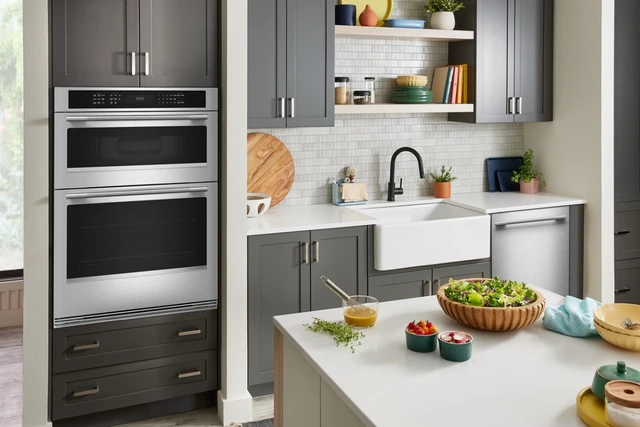
Walk into almost any high-end kitchen remodel today and you’ll spot a sleek, handle-free appliance tucked neatly into the island cabinetry. For years, built-in wall units—stacked neatly above a single wall oven—were the gold standard for keeping countertops clutter-free. Now, drawer microwaves have captured the attention of homeowners and designers alike.
Showroom appeal and real-world durability are two very different things. When an appliance has to endure forty cycles a week of reheating morning coffee, thawing frozen chicken breasts, and surviving the heavy-handed slam of a rushed teenager, design trends take a back seat to mechanical reality. Choosing between a drawer microwave and a built-in wall unit comes down to how your household actually moves through the kitchen and which design holds up best under constant, everyday wear.
How Daily Family Habits Stress an Appliance
Before comparing specs, it helps to look at what actually breaks a microwave in a busy home. Most people assume the heating element—the magnetron—is the first thing to go. In reality, magnetrons routinely last eight to twelve years under normal household use. What fails far sooner are the mechanical and electronic touchpoints that absorb physical force day after day.
In a family kitchen, the microwave isn’t treated gently. Doors get yanked open before the timer hits zero, heavy ceramic bowls get dropped onto glass trays, and splatters get left behind until they bake onto interior surfaces. Over five or ten years, the structural differences between a pull-out drawer and a swing-door wall unit determine whether you’re calling a repair technician or enjoying trouble-free meals.
Drawer Microwaves: Ergonomics Meet Motorized Complexity
A drawer microwave sits below counter height, usually inside a base cabinet or kitchen island, and glides outward like a deep storage drawer. Instead of reaching up into a dark box, you load and unload food from above.
The Everyday Advantages for Families
From a purely ergonomic standpoint, drawer units solve several headaches that plague busy households. Loading and removing hot liquids is noticeably safer because you lift bowls straight up rather than pulling them forward toward your face or chest. For kids, shorter adults, or anyone using a wheelchair, waist-level access removes the need to reach overhead for a steaming plate of leftovers.
Stirring food mid-cycle is also much easier. You simply slide the drawer open, stir your pasta sauce or oatmeal right where it sits, and close it again without balancing a hot dish on the edge of a counter. Because most drawer models use a flat ceramic base instead of a rotating glass turntable, you also gain usable floor space for rectangular casserole dishes that would otherwise jam against the walls of a standard unit.
Where Drawer Units Struggle Under Heavy Use
The biggest trade-off with a drawer microwave lies in its motorized opening and closing mechanism. While some models allow you to pull the handle manually, most rely on an electric motor, glide rails, and sensors to slide the heavy front assembly in and out. In a house where the microwave gets opened twenty times a day, those moving tracks and drive gears absorb constant stress.
Impatient users make this worse. If someone pushes the drawer shut forcefully instead of letting the motor do the work, or tugs on it mid-cycle, the drive belt or gear teeth can strip out of alignment. Spills pose another hidden threat. Because you load food from the top, spilled soup or splattered grease drips downward toward the base of the cavity and the glide tracks underneath. Cleaning the ceiling of a drawer microwave—where the heating elements and stirrers sit—also requires awkward bending and twisting, which means splatters often go ignored until they cause smoke or arcing.
Built-In Wall Units: Proven Mechanics and Versatility
Built-in wall microwaves sit flush inside tall cabinetry at chest or eye level, typically paired with a matching wall oven. They feature either a side-hinged swing door or a drop-down door that mimics a traditional oven.
Built-In Durability and Cooking Power
Because built-in wall units rely on simple, time-tested mechanical hinges, they avoid the motorized failure points common to drawer models. A side-swing door has very few moving parts beyond the hinges and a trio of interlock safety switches. Even if a door switch wears out after seven or eight years of aggressive slamming, it’s one of the quickest and most affordable repairs a technician can perform.
Wall units also offer far greater culinary versatility. While almost all drawer microwaves are standard 950- to 1,000-watt reheating appliances, many built-in wall models double as convection ovens, speed ovens, or steam ovens. During holiday dinners or busy weeknights, having a built-in unit that can brown, bake, or roast alongside your main oven takes enormous pressure off the rest of the kitchen. Seeing inside is easier, too. Eye-level placement lets you watch butter melt or soup bubble through the glass window without crouching down to peer through a top-angled control panel.
The Ergonomic and Layout Drawbacks
The primary downside of a wall unit is height. When stacked above a standard wall oven, the microwave often ends up slightly above shoulder level for average-height cooks. Lifting a heavy, uncovered bowl of hot broth down from that height carries a real risk of spills and burns, especially for younger family members.
Drop-down doors—popular on many luxury wall units—create their own spatial hurdle. When open, the door extends roughly twelve to fifteen inches outward, forcing you to lean over a hot barrier to reach the back of the cavity. If the unit is installed in a narrow walkway, an open door can also block traffic flow right in the middle of dinner prep.
Head-to-Head Comparison for Busy Households
Safety and Accessibility Drawer units take the clear lead for households with school-aged children or multi-generational family members. Waist-level loading eliminates overhead reaching and reduces spill hazards. Built-in wall units work best when installed at chest height in a dedicated cabinet column rather than stacked high above a wall oven.
Long-Term Mechanical Reliability Built-in wall units have the edge in sheer longevity. Without motorized tracks carrying the weight of the door and control panel every time you reheat a cup of tea, there are simply fewer components that can wear out. Drawer microwaves hold up well when treated gently, but rough daily handling accelerates wear on the glide assembly.
Ease of Cleaning Wiping down a built-in wall unit takes thirty seconds because the interior walls, glass turntable, and ceiling are right in front of your eyes. Cleaning a drawer microwave is more tedious; you have to lean over the open drawer to scrub the upper cavity, and crumbs frequently collect in the front lip and track channels.
Replacement and Repair Costs Both styles require professional installation and dedicated electrical circuits, and both cost significantly more than countertop models. However, replacing a built-in wall unit down the road is much simpler. Standard trim kits and uniform 24-, 27-, or 30-inch cabinet cutouts give you dozens of replacement brands to choose from. Drawer microwaves rely on specialized cabinetry clearances and fewer competing manufacturers, meaning a future replacement can lock you into a narrow set of expensive models.
Which One Belongs in Your Kitchen?
Neither appliance is universally superior; the right pick depends on your kitchen’s layout and who uses the microwave most often.
Choose a drawer microwave if your main goal is preserving upper cabinet space, keeping island sightlines completely open, or making the appliance safely accessible to kids and shorter cooks. Just make sure everyone in the house gets into the habit of using the open and close buttons rather than yanking the drawer by hand.
Choose a built-in wall unit if you want maximum mechanical durability, easier daily cleaning, and the option to upgrade to convection or speed-cooking features. If you go this route, pay close attention to installation height during the cabinet design phase—mounting the unit at comfortable chest level rather than high above a wall oven gives you the durability of a classic wall unit without the awkward overhead reach.