Stocking an Allergy-Safe Pantry When Hosting Friends With Celiac or Nut Sensitivities

Inviting friends over for dinner or a weekend stay should feel relaxed, yet when someone at the table has celiac disease or a severe nut allergy, casual meal prep turns into a high-stakes responsibility. Even a well-meaning host can accidentally trigger a reaction with a splash of standard soy sauce, a shared jar of peanut butter, or a sprinkle of flour used to dust a baking pan.
The good news is that you do not need to overhaul your entire kitchen or cook bland food to make guests feel completely at ease. With smart label reading, deliberate pantry organization, and a curated stock of reliable staples, you can build an allergy-safe setup that makes hosting effortless and safe for everyone at the table.

Understanding the Stakes: Celiac Disease vs. Nut Allergies

Before filling your grocery cart, it helps to recognize how differently celiac disease and nut sensitivities behave in a home kitchen. Treating both with equal rigor keeps your prep routines consistent and prevents subtle mistakes.
Celiac disease is an autoimmune reaction to gluten, a protein found in wheat, barley, rye, and triticale. Unlike a mild dietary preference, celiac disease means even microscopic crumbs—equivalent to a fraction of a bread crumb—can damage the small intestine and leave a guest ill for days. Oats also require extra caution; while naturally gluten-free, conventional oats are frequently processed on shared farm and mill equipment, so only certified gluten-free oats belong in a celiac-safe pantry.
Peanut and tree nut allergies involve an immune system response that can range from localized hives and digestive distress to life-threatening anaphylaxis. Because peanuts are legumes and tree nuts include almonds, walnuts, cashews, pecans, pistachios, hazelnuts, and Brazil nuts, a guest might react to one category or both. Always ask your guests specifically which ingredients they avoid, whether trace cross-contact in manufacturing facilities is an issue for them, and where they keep emergency medication like an epinephrine auto-injector.

How to Audit and Organize Your Pantry Before Shopping

You do not have to throw out every jar in your cabinets, though you do need clear physical boundaries. Cross-contact often happens not from the recipe itself, but from reaching into a shared container or grabbing the wrong look-alike package mid-recipe.
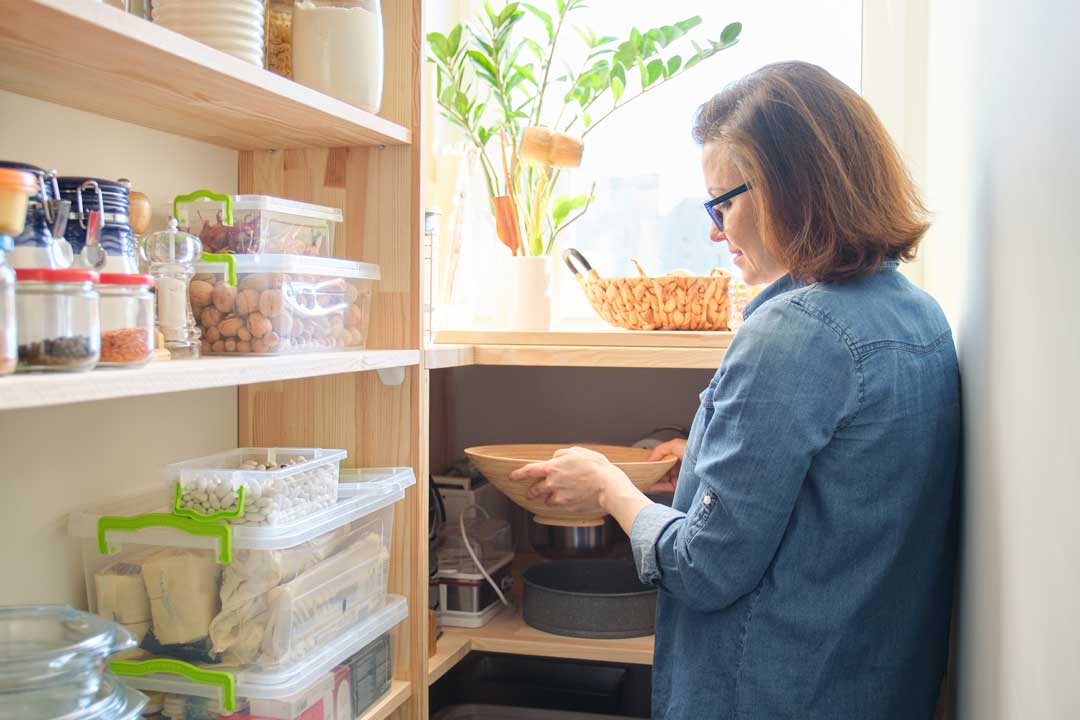
Start by dedicating one eye-level shelf or a large sealed bin specifically for allergy-safe hosting staples. Placing safe ingredients above conventional wheat flour or nut products prevents loose powder or crumbs from drifting down onto sealed packages below.
Pay close attention to double-dipping hazards. Open jars of mayonnaise, butter, jam, mustard, hummus, and honey frequently harbor invisible wheat crumbs from knives used on toast, or traces of peanut butter from shared utensils. When hosting, buy fresh, unopened squeeze bottles or new jars dedicated strictly to safe prep, and label their lids with painter’s tape and a marker so nobody accidentally dips a used knife inside.

Essential Gluten-Free Pantry Staples Worth Keeping on Hand

A well-stocked gluten-free pantry allows you to prepare classic comfort foods, quick breakfasts, and dinner party mains without anyone feeling like an afterthought.

Grains, Pasta, and Baking Basics

  • Rice and Ancient Grains: White rice, brown rice, jasmine rice, quinoa, and polenta are naturally gluten-free, inexpensive, and versatile enough to anchor almost any dinner menu.

  • Gluten-Free Pasta: Look for brown rice pasta, corn-and-rice blends, or chickpea pasta. Brown rice and corn blends hold their texture closest to traditional durum wheat pasta, especially when rinsed briefly after boiling.

  • Certified Gluten-Free Rolled Oats: Ideal for breakfast bowls, granola, or crisp fruit toppings, provided the package carries an official gluten-free certification seal.

  • Measure-for-Measure Gluten-Free Baking Flour: Keep one reliable all-purpose blend containing xanthan gum on hand for thickening pan sauces, dredging chicken cutlets, or baking quick breads. Avoid almond flour in mixed-allergy households so you solve one restriction without triggering another.

Sauces, Condiments, and Flavor Builders

Hidden gluten lurks in everyday pantry sauces where wheat is used as a thickener or fermentation base. Swap out risky staples for safe alternatives that taste identical in finished dishes:
  • Tamari or Coconut Aminos: Traditional soy sauce is brewed with wheat. Certified gluten-free tamari delivers rich umami flavor for stir-fries and marinades, while coconut aminos offer a slightly sweeter, soy-free option.

  • Broths and Stocks: Many canned broths and bouillon cubes contain wheat starch or yeast extract derived from barley. Stock cartons labeled explicitly gluten-free.

  • Vinegars and Mustards: Distilled white vinegar, apple cider vinegar, and balsamic vinegar are safe, though malt vinegar is made from barley and must stay off the table. Double-check Dijon and specialty mustards to ensure no wheat flour was added as a stabilizer.

  • Pure Spices and Seasoning Blends: Single-ingredient dried herbs and spices are naturally safe, whereas taco, chili, and grill rubs sometimes include wheat flour as an anti-caking agent.

Building a Safe Nut-Free Backup Stash

When avoiding peanuts and tree nuts, the goal is replacing rich textures, crunch, and creamy bases with ingredients that carry zero nut risk.

Spreads, Oils, and Dairy Alternatives

  • Sunflower Seed Butter or Soy Nut Butter: Roasted sunflower seed butter gives you the creamy, savory satisfaction of peanut butter for sandwiches, sauces, and baking, without peanuts or tree nuts.

  • Safe Cooking Oils: Olive oil, avocado oil, canola oil, and melted butter cover virtually every cooking need. Keep peanut oil, walnut oil, and unrefined sesame oil out of shared prep unless you have confirmed sesame is safe for your guests.

  • Oat, Soy, or Dairy Milk: Almond and cashew milks are common in many refrigerators, so keep regular dairy milk, certified gluten-free oat milk, or unsweetened soy milk available for coffee, cereal, and sauces.

Crunchy Toppings and Crowd-Pleasing Snacks

Salads, grain bowls, and cheese boards often rely on nuts for texture, yet seeds and legumes fill that role effortlessly:
  • Roasted Pepitas and Sunflower Seeds: Toasted pumpkin seeds add crispness and color to roasted vegetables, salads, and pasta dishes.

  • Crispy Chickpeas or Corn Nuts: Spiced roasted chickpeas offer hearty crunch alongside drinks before dinner.

  • Simple, Clearly Labeled Snacks: Stock plain salted tortilla chips, potato chips cooked in sunflower or canola oil, certified gluten-free crackers, salsa, guacamole, and olives. Foods with short, recognizable ingredient lists are far easier to verify than heavily processed party mixes.

Decoding Food Labels Without Second-Guessing

Smart label reading protects your guests from manufacturing cross-contact that ingredient lists alone do not always reveal. Under U.S. labeling laws, packaged foods must clearly declare major allergens—including wheat, peanuts, and tree nuts—either directly in the ingredient list or in a separate Contains statement immediately beneath it.
However, voluntary advisory statements such as “May contain peanuts” or “Processed in a facility that also processes wheat and tree nuts” are not strictly standardized. For a guest with celiac disease or an anaphylactic nut allergy, advisory warnings are a clear signal to leave the item on the store shelf. Always read the label every time you shop, even for familiar brands, because manufacturers periodically change suppliers and facility lines.

Kitchen Prep Habits That Prevent Cross-Contact

Even the cleanest pantry needs thoughtful execution once you turn on the stove. Small adjustments in your workflow eliminate the most common kitchen slip-ups:
  • Prep safe dishes first: Cook the allergy-safe meal before opening any gluten-containing bread or nut snacks, then cover and set the safe food aside.

  • Skip porous wooden tools and scratched nonstick pans: Wood cutting boards, wooden spoons, and deeply scored plastic boards trap proteins in tiny grooves. Use clean stainless steel, glass, ceramic, or dedicated color-coded plastic boards instead.

  • Avoid shared toasters and convection ovens with loose flour: Standard pop-up toasters are notorious crumb traps and cannot be cleaned thoroughly enough for celiac guests. Use fresh foil on a clean baking sheet in the oven instead.

  • Keep original packaging on the counter: Save the wrappers and boxes from your gluten-free and nut-free ingredients until guests arrive. Letting a cautious friend read the label themselves builds immediate trust and lets them relax and enjoy the meal.

Hosting friends with celiac disease or nut sensitivities is ultimately about hospitality, not perfection. When you take the guesswork out of your pantry and prep space ahead of time, your guests can focus on good conversation and great food rather than worrying about what is on their plate.