

The automotive industry is undergoing its most radical transformation since the invention of the assembly line. For over a century, car manufacturing focused almost entirely on mechanical engineering, horsepower, structural integrity, and combustion efficiency. Today, the fundamental definition of an automobile has shifted. Vehicles are no longer isolated mechanical machines; they are sophisticated, internet-connected digital platforms operating on complex software networks.
This shift toward smart technology is redefining every aspect of mobility. Artificial intelligence, advanced sensor arrays, cloud computing networks, and high-speed cellular connectivity are reshaping how vehicles are designed, built, driven, and maintained. From self-correcting driver assistance systems to intelligent factories that predict component bottlenecks, smart technology is establishing a new paradigm for global transportation.
The Shift to Software Defined Vehicles
The foundation of modern automotive innovation lies in the rise of the software defined vehicle. Historically, adding a new feature to a car meant installing a dedicated hardware module with its own isolated microcontroller. A typical luxury car often contained upwards of one hundred separate electronic control units, creating massive wiring complexity and limited processing power.
Smart architecture consolidates these fragmented computers into centralized domain controllers powered by high-performance microprocessors. This fundamental change allows automakers to manage vehicle functions primarily through software rather than physical hardware.
Key advantages of software defined vehicles include:
-
Over the air updates that deliver wireless performance improvements, safety patches, and new features directly to the car while parked in a garage.
-
Extended vehicle lifecycles because software enhancements keep older physical models feeling technologically current.
-
Scalable feature deployment where owners can unlock capabilities like advanced parking assistance or premium audio settings through digital activation.
-
Reduced vehicle weight and manufacturing complexity due to simplified physical wiring harnesses.
As software becomes the primary differentiator between competitive models, traditional automakers are retooling their workforces to prioritize coding, cybersecurity, and cloud engineering over purely mechanical design.
Advanced Driver Assistance and Autonomous Capabilities
Safety and active driving automation represent some of the most visible applications of smart technology on the road today. Modern vehicles rely on multi-sensor fusion, combining cameras, radar, ultrasonic sensors, and laser-based detection systems to create an instantaneous three-dimensional map of the surrounding environment.
Centralized artificial intelligence processors analyze this constant stream of visual and spatial data in milliseconds. This allows automated systems to take preventative action faster than human reaction times permit.
Advanced driving capabilities now standard or available on many new platforms include:
-
Automatic emergency braking with pedestrian and cyclist detection to mitigate or avoid low-speed collisions.
-
Dynamic lane centering and adaptive cruise control that maintain safe spacing in stop-and-go highway traffic.
-
Blind spot intervention systems that actively resist steering changes when another vehicle is detected in an adjacent lane.
-
Automated valet parking systems that allow a vehicle to navigate crowded parking structures and park itself without a occupant inside.
-
Driver monitoring cameras that evaluate eye movement and head position to warn against fatigue or distraction.
While fully autonomous Level 5 vehicles operating anywhere without human supervision remain in development, Level 2 and Level 3 conditional autonomy are already active on public highways. These systems handle steering, acceleration, and braking under specific conditions, requiring the driver to take over only when prompted by system alerts.
Connected Ecosystems and Vehicle to Everything Communication
Smart vehicles do not operate in a vacuum; they interact constantly with their environment through Vehicle to Everything, or V2X, communication networks. Utilizing high-speed 5G cellular infrastructure and direct short-range radio signals, connected vehicles broadcast and receive critical operational data to build collective situational awareness.
V2X technology operates across several distinct communication pathways:
-
Vehicle to Vehicle communication lets cars transmit velocity, heading, and braking status directly to nearby vehicles, warning following drivers of sudden stops hidden around blind corners.
-
Vehicle to Infrastructure communication connects cars to traffic signals, road construction markers, and speed zone sensors to optimize signal timing and reduce urban traffic congestion.
-
Vehicle to Pedestrian communication alerts drivers to nearby pedestrians carrying connected devices, even if they are obscured by parked vehicles or nighttime darkness.
-
Vehicle to Cloud communication streams anonymous fleet telematics back to municipal planning agencies and mapping services to deliver real-time road hazard alerts.
By turning individual vehicles into active data nodes, connected ecosystems significantly reduce traffic accidents, cut idle times at intersections, and lower total fuel consumption across urban road networks.
Intelligent Powertrains and Smart Energy Management
The global transition toward electric mobility relies heavily on smart technology to overcome historical limits regarding driving range, battery lifespan, and charging speed. An electric vehicle is essentially a massive chemical battery paired with high-voltage power electronics, making intelligent energy management vital to vehicle performance.
Smart battery management systems constantly monitor the individual voltage, current, and temperature of thousands of internal battery cells. Artificial intelligence algorithms analyze driving habits, ambient outdoor temperatures, and planned navigation routes to adjust power distribution dynamically.
Key smart energy innovations include:
-
Predictive thermal conditioning that pre-warms or cools the vehicle battery pack as it approaches a high-speed charging station to maximize energy absorption rates.
-
Route-optimized energy consumption that calculates topography, wind speeds, and cabin heating demands to deliver accurate remaining range projections.
-
Adaptive regenerative braking that automatically increases energy capture resistance when approaching downhill slopes or heavy deceleration zones.
-
Bidirectional charging capability that transforms electric vehicles into mobile power sources capable of feeding energy back into home backup systems or local electrical grids during peak demand hours.
These intelligent efficiency management tools eliminate driver range anxiety and directly extend the usable lifetime of expensive battery packs.
Predictive Diagnostics and Fleet Management
Unexpected mechanical breakdowns are rapidly becoming a thing of the past thanks to smart telematics and predictive maintenance systems. Instead of relying solely on fixed mileage schedules for oil changes or brake inspections, smart vehicles continuously run internal diagnostic tests on major subsystems.
Cloud-based analytics platforms evaluate continuous stream data from pressure sensors, thermal meters, and vibration detectors. When a component begins exhibiting micro-anomalies that indicate impending mechanical fatigue, the system alerts the driver and automatically schedule a service appointment at a nearby service center before a breakdown occurs.
For commercial logistics operations and rental fleets, smart management platforms offer unprecedented operational visibility:
-
Real-time GPS tracking combined with algorithmic routing helps delivery fleets avoid urban bottleneck zones and lower total fuel expenditure.
-
Driver performance scoring identifies aggressive acceleration, hard braking, and excessive idling, providing actionable feedback to improve driver safety and cut operating costs.
-
Remote hardware diagnostics allow mechanics to inspect error codes and order required replacement parts before a service vehicle even enters the repair shop.
This data-driven approach minimizes unexpected fleet downtime and dramatically reduces the total cost of ownership for commercial and private operators alike.
Smart Manufacturing and Industry Production Lines
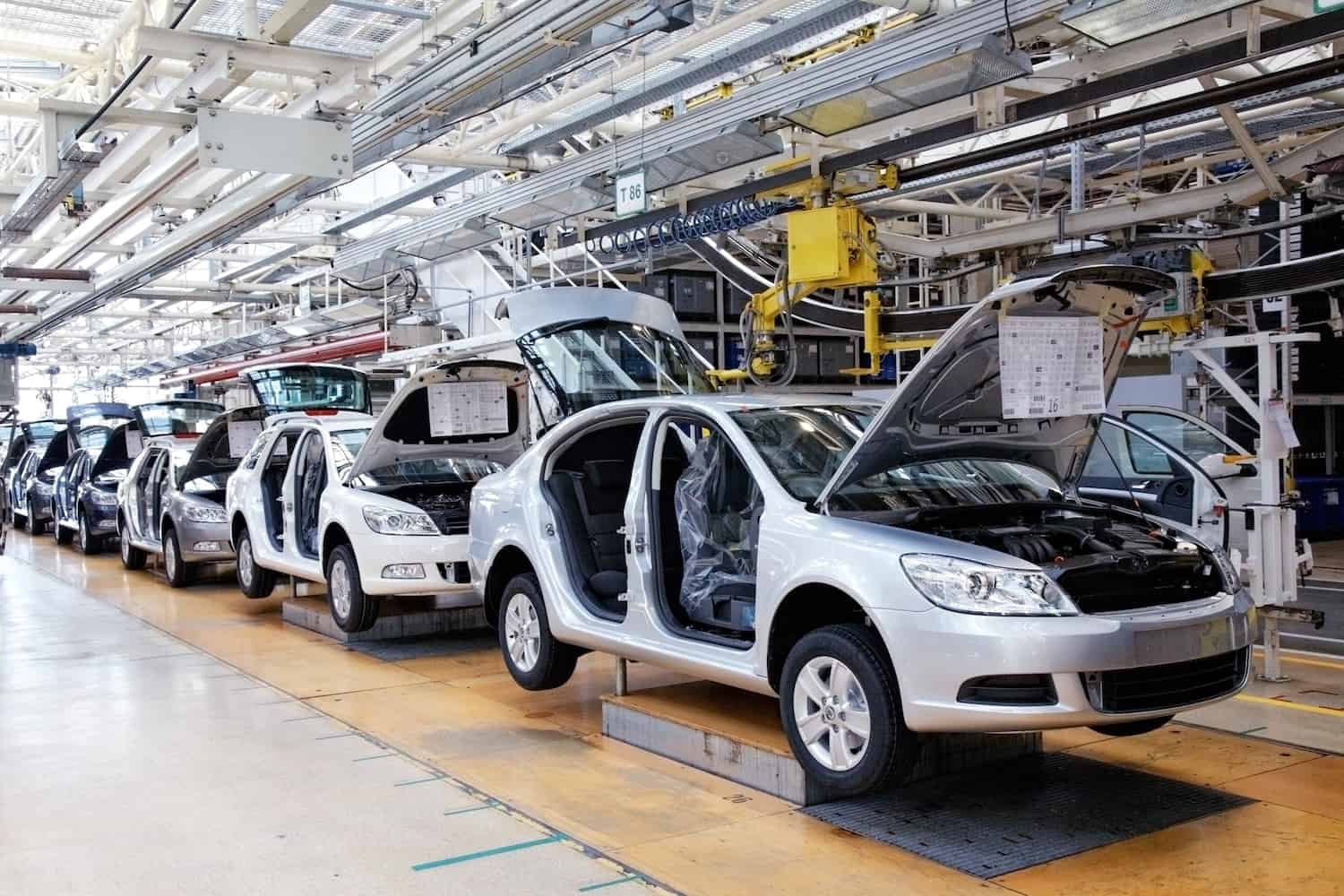
The transformation of the automotive industry extends far beyond the vehicle itself and deep into the factory floor. Modern automotive assembly plants are among the most advanced smart environments in global manufacturing, relying heavily on artificial intelligence, industrial internet of things devices, and collaborative robotics.
Digital twin technology creates exact virtual replicas of physical assembly lines in real time. Manufacturing engineers use these digital models to test assembly workflow adjustments, simulate factory floor ergonomics, and identify potential machinery stress points without interrupting physical vehicle production.
Automated factory floors utilize several key smart technologies:
-
Autonomous mobile robots that navigate factory floors independently to deliver raw materials and parts precisely where needed on the assembly line.
-
AI-driven computer vision systems that inspect body paint finishes, panel gaps, and critical bolt torque settings with sub-millimeter precision.
-
Predictive factory maintenance systems that monitor heavy stamping presses and robot joints to schedule repairs before assembly lines suffer costly unscheduled stoppages.
-
Collaborative human-robot workstations where smart robotic arms handle high-weight or repetitive tasks while human technicians manage complex wiring installations.
This level of manufacturing automation improves build consistency, reduces physical strain on assembly workers, and speeds up the delivery timeline from initial design concept to showroom floor.
Frequently Asked Questions
How does smart automotive technology impact vehicle insurance premiums?
Smart technology affects insurance rates in multiple ways. On one hand, advanced driver assistance features like automatic emergency braking and lane keep assist reduce collision frequencies, allowing insurers to offer discounts for equipped vehicles. On the other hand, replacing damaged bumpers or windshields that contain delicate radar sensors, cameras, and display modules can raise repair costs after an accident. Many insurance providers now offer usage-based policies that track actual driving behavior via smart telematics, rewarding smooth braking, low night driving, and compliant speeds with lower monthly premiums.
What measures are automakers taking to protect smart connected cars from cyberattacks?
As vehicles become reliant on software networks and internet connectivity, cybersecurity has become a top priority for automakers. Manufacturers build defense systems into vehicle electronics using hardware-based security modules that encrypt internal data communications. Critical driving functions like steering and braking are isolated on separate internal networks from public-facing systems like Bluetooth and Wi-Fi infotainment. Automakers also employ dedicated software teams to monitor global threat networks, issue encrypted over the air security patches, and perform continuous vulnerability testing.
Will non-smart mechanical vehicles become illegal to drive on public roads?
There are currently no laws banning traditional mechanical vehicles from public roadways. State and federal regulatory agencies focus on safety compliance and emissions standards for newly manufactured vehicles rather than restricting existing older automobiles. While legacy vehicles may eventually face access restrictions in certain designated low-emission or fully automated zero-occupant transit corridors in major metropolitan centers, manually driven traditional cars will remain legal on general public roads for the foreseeable future.
How do smart vehicle navigation and driving features function in areas without cellular reception?
Essential smart safety features and basic vehicle controls are processed entirely by on-board computers and onboard sensor suites, meaning they function normally without a cellular network connection. Features like automatic emergency braking, radar cruise control, and local blind spot alerts do not require internet access. For navigation, smart systems store cached map data locally on internal memory drives. However, cloud-dependent features like live traffic updates, real-time weather alerts, voice command processing, and remote mobile app controls will temporarily pause until cellular signal is restored.
Who owns the personal data generated by smart connected vehicles?
Data ownership rules vary significantly depending on local privacy legislation. In general, driving logs, location history, voice recordings, and user preference profiles are generated by the vehicle owner’s usage. Automakers collect anonymous operational telematics to improve software performance and train safety algorithms. However, regulations like the General Data Protection Regulation in Europe and state level privacy laws in the United States require automakers to give consumers explicit opt-in controls, transparency regarding data collection practices, and the right to request deletion of personal driving records.
How does smart software integration affect a car’s resale value over time?
Smart software capabilities can preserve vehicle resale values better than traditional hardware alone. Because software defined vehicles receive continuous over the air performance updates, a four-year-old vehicle can feature the same user interface, navigational accuracy, and battery efficiency algorithms as a brand-new showroom model. Conversely, vehicles that lack over the air update capabilities or feature outdated computing hardware may experience accelerated depreciation as consumer preferences lean heavily toward modern digital cockpit experiences.
What changes are cities making to support smart automated vehicles on municipal roads?
Municipal transportation departments are upgrading urban infrastructure to communicate seamlessly with smart vehicles. Cities are installing smart traffic signals equipped with wireless transmitters that communicate light timings directly to approaching cars to streamline traffic flow. Municipalities are also modernizing road markings with high-contrast reflective materials to improve optical camera tracking, installing connected EV charging plazas, and designating dedicated pickup and drop-off zones for autonomous rideshare services to limit curb traffic congestion.